

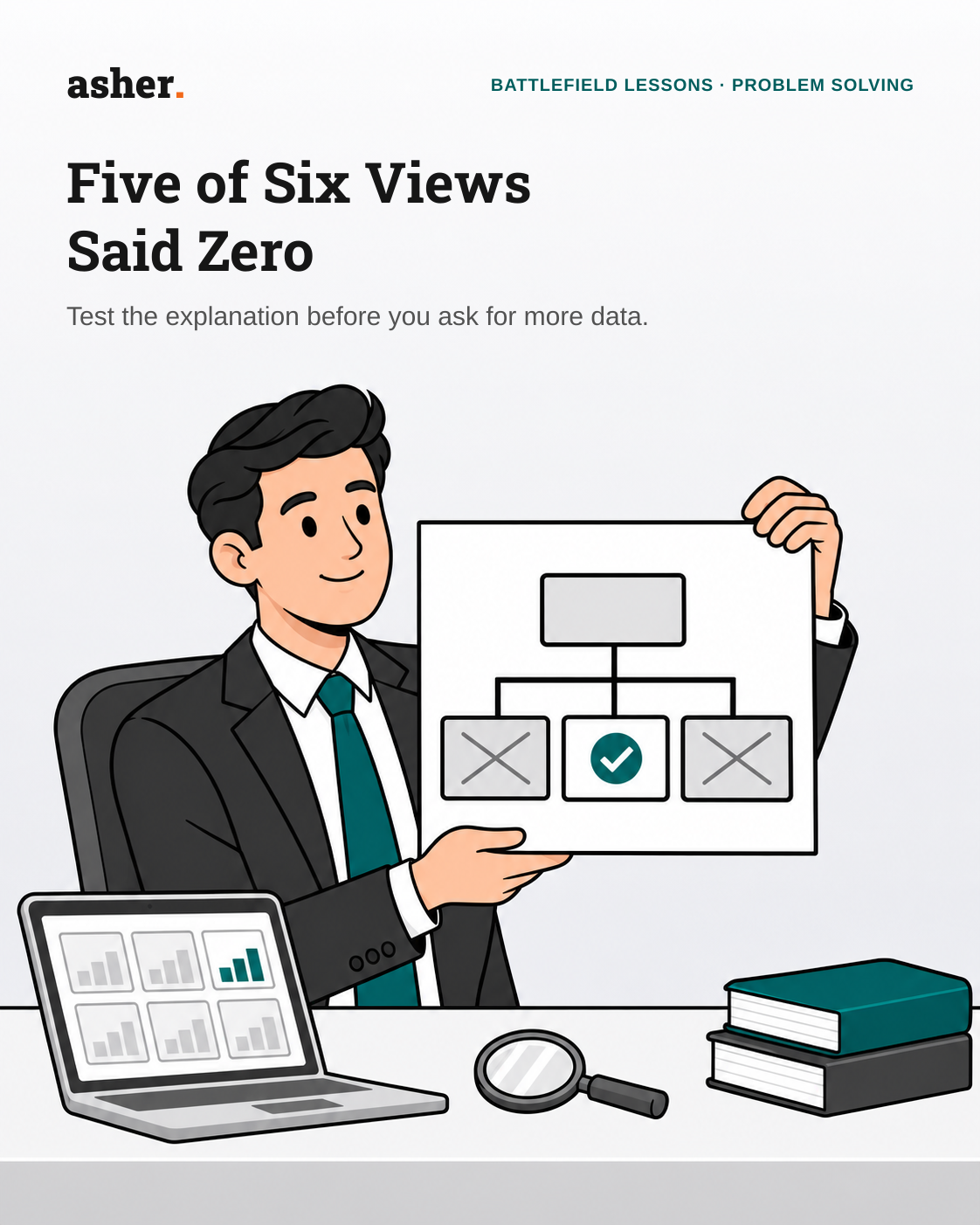
The Model Closed to the Cent. Five of Six Views Said Zero.
The profitability model reconciled to the cent, yet five of six reporting views showed zero. How hypothesis-led problem solving found the cause in one run, and how to apply the method to your next decision.
“We Already Have Our Models.” Nine Questions to Know if You Can Defend Them
Having a model and being able to defend it are two different things. Nine questions, one per governance dimension, to check in an afternoon whether your FTP, profitability and allocation models would hold up. Part 3 of the model governance series.
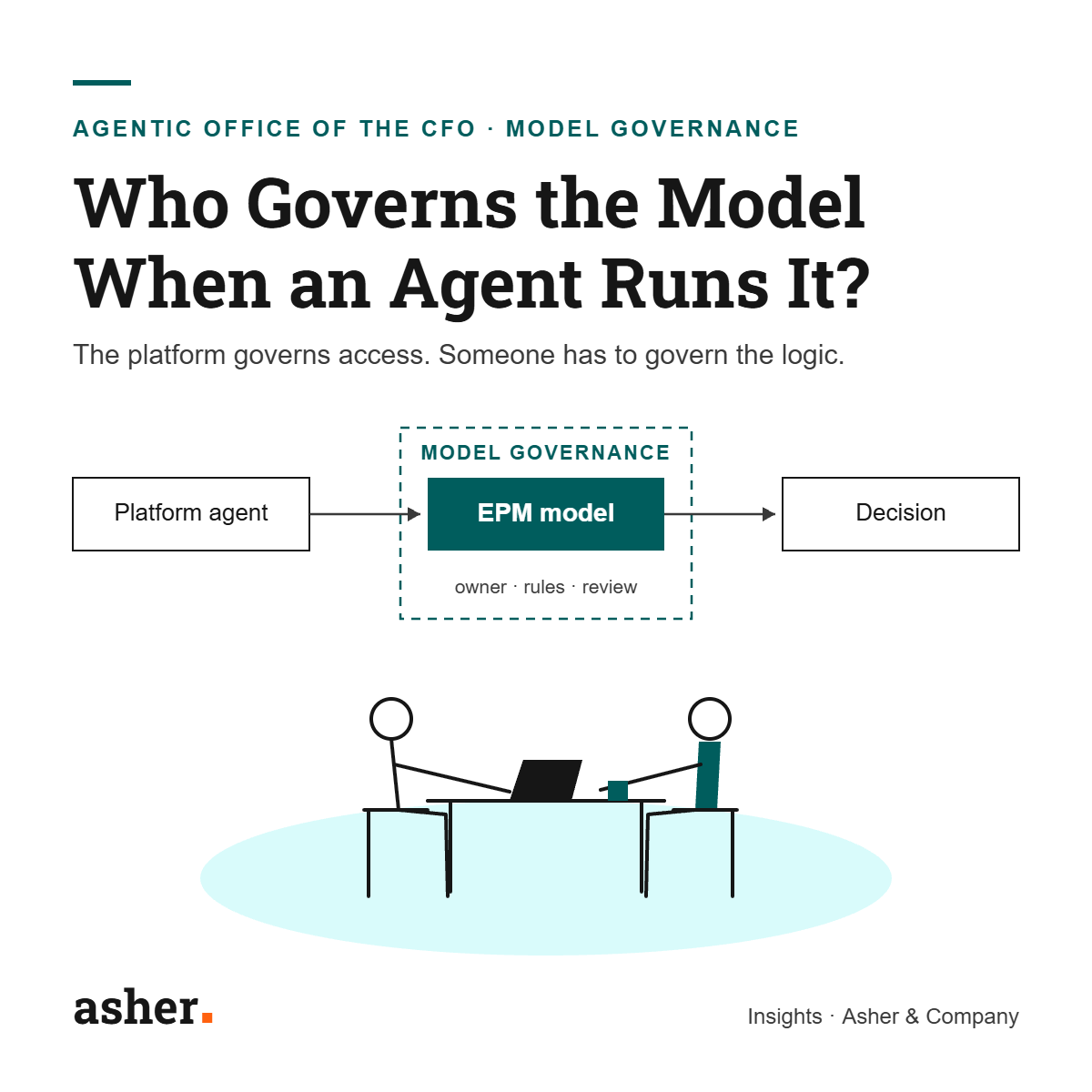
Who Governs the Model When an Agent Runs It?
AI agents are already running finance models. The platform governs access; someone has to govern the logic they execute. Why that matters for the Agentic Office of the CFO, where SR 26-2 leaves banks, and five practices to start with.
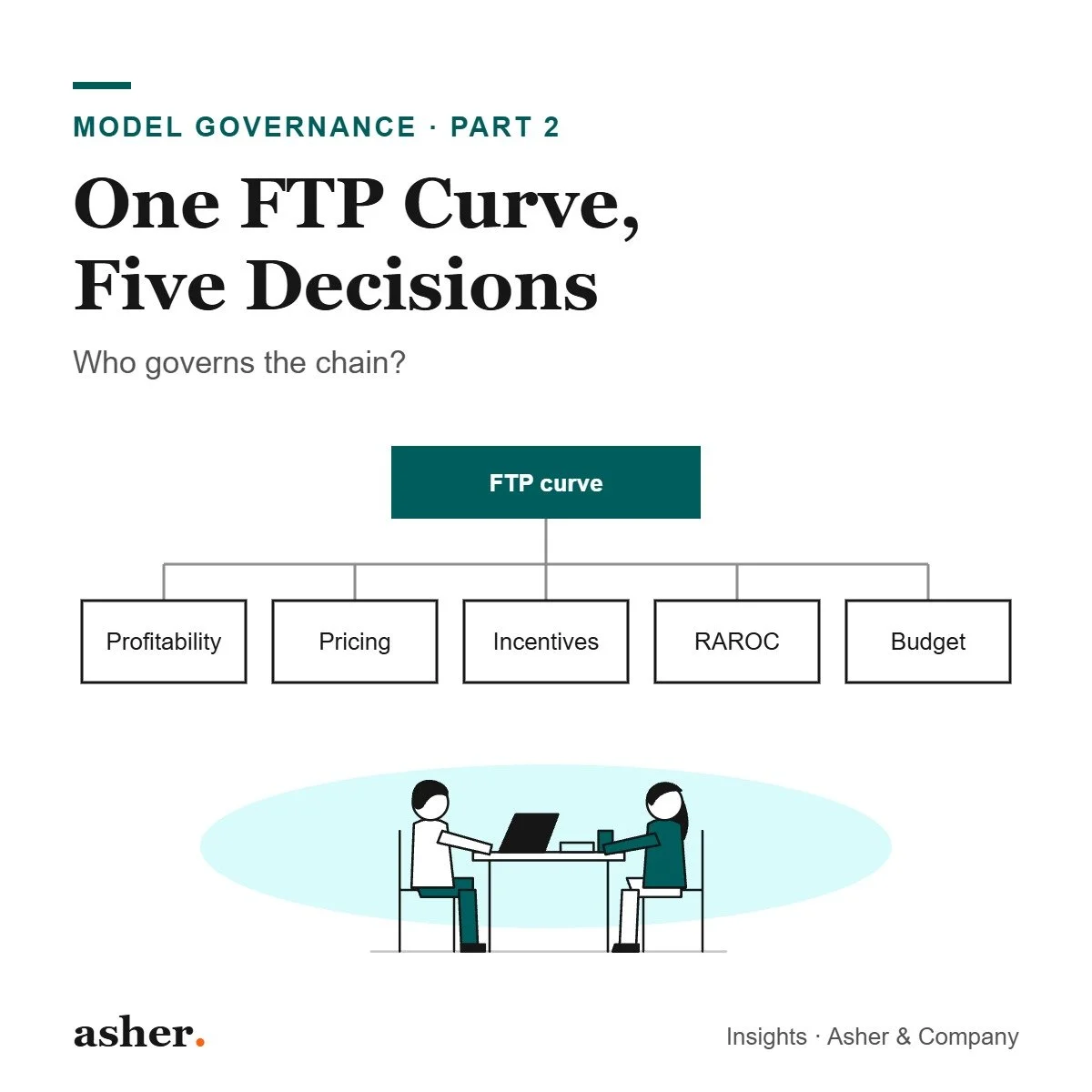
One FTP Curve, Five Decisions: Who Governs the Chain?
One FTP curve feeds profitability, pricing, incentives, RAROC and the budget. Each link has an owner. The chain usually has none. How to map it in a week, and the signs it needs attention.

The Megawatt Is the New Lease: How to Keep the Data Center Race from Destroying Value
Utilities now bill large data centers for 80% to 85% of contracted power for up to 14 years. Idle capacity has an invoice. A worked example, two price floors and a CFO checklist for keeping every megawatt profitable.
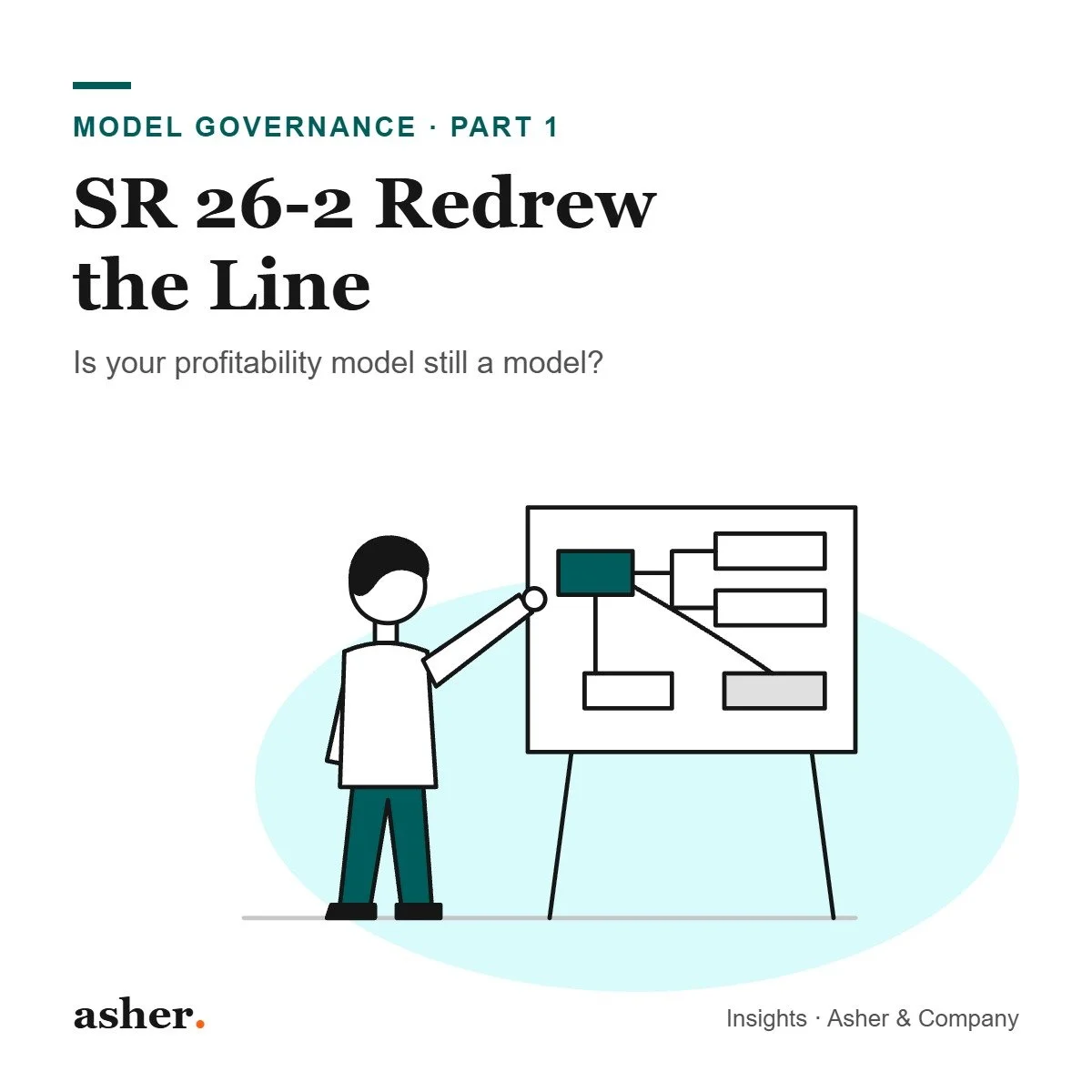
SR 26-2 Redrew the Line. Is Your Profitability Model Still a Model?
SR 26-2 pulls your FTP curve into the model inventory and pushes many cost allocation engines out. The risk stays. A Finance reading of the new guidance, model by model, with five questions to ask this quarter.
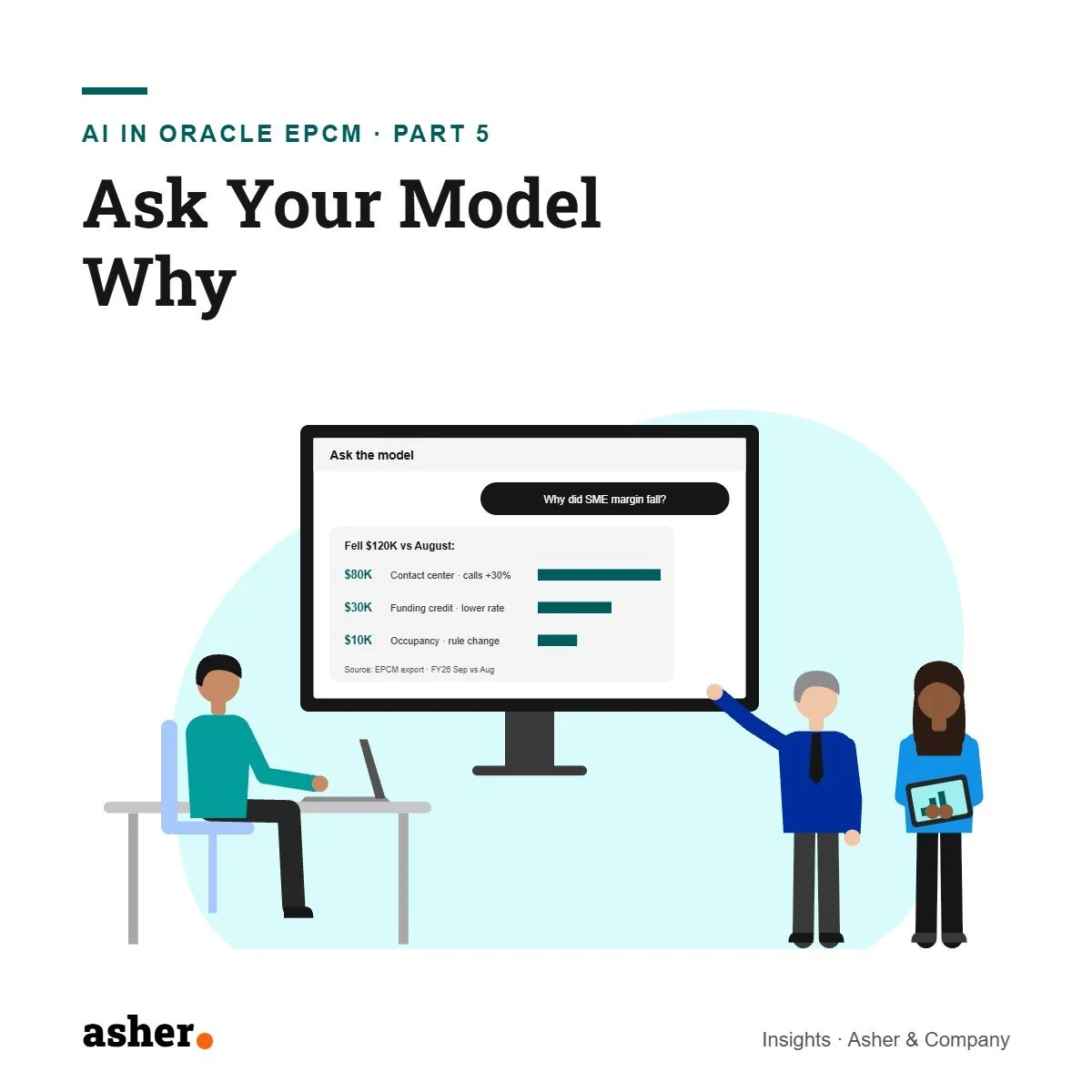
Asking Your Profitability Model Why: The Conversational Layer for Oracle EPCM
IPM Insights tells you where a margin moved. A CFO wants to know why. How to build a conversational layer on Oracle EPCM where the model computes, the agent explains and every answer shows its source.
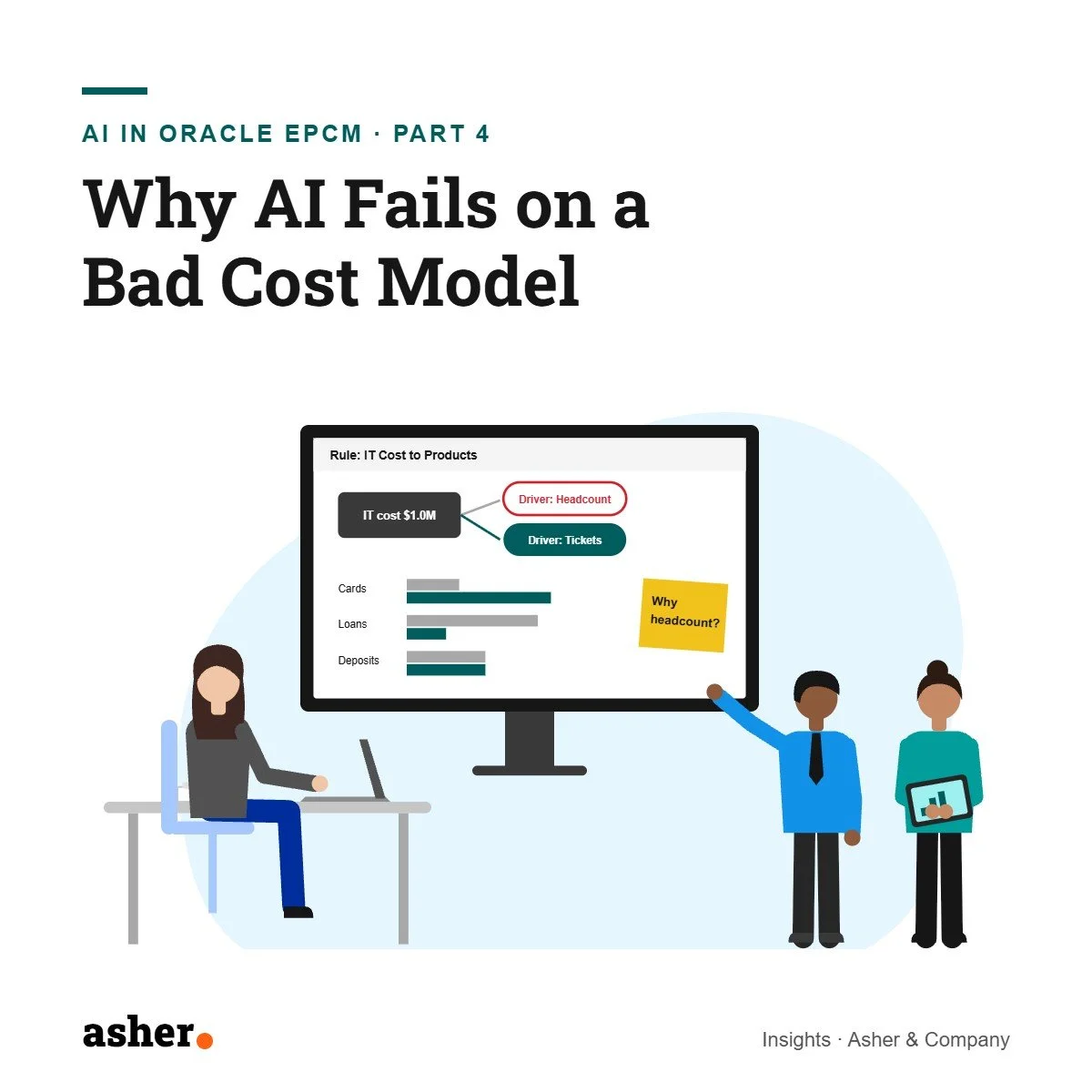
Why AI Fails on a Badly Designed Cost Model
AI in Oracle EPCM reads the structure and numbers of a cost model. It doesn’t judge whether the logic is sound. Five design flaws AI makes worse, and a five-question check to run before you switch it on.
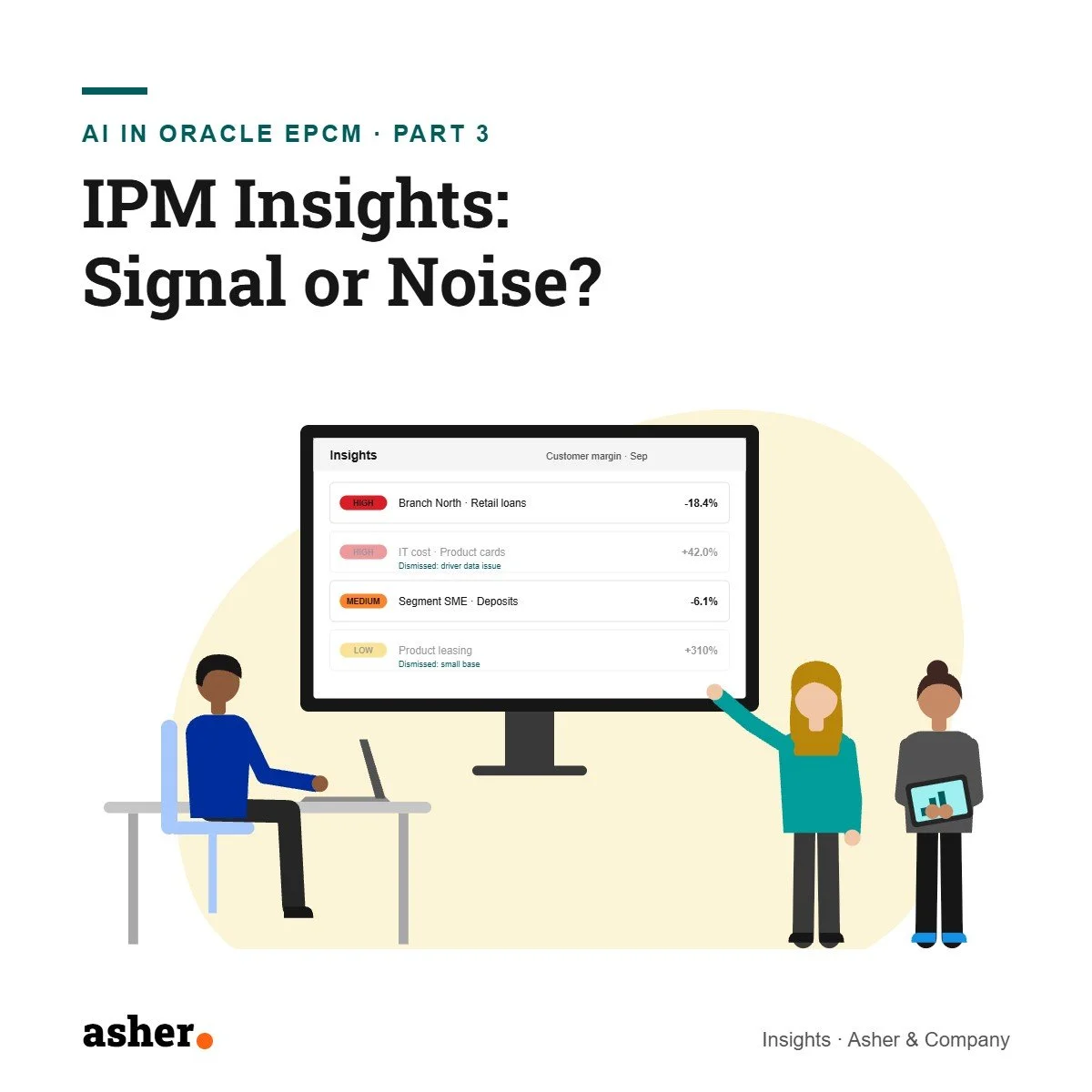
IPM Insights on a Profitability Model: Which Alerts Deserve a Look
IPM Insights flags margins that moved more than expected. On a profitability model, many of those alerts are model mechanics. Here is how to configure Insights so the alerts that reach the business are worth reading.
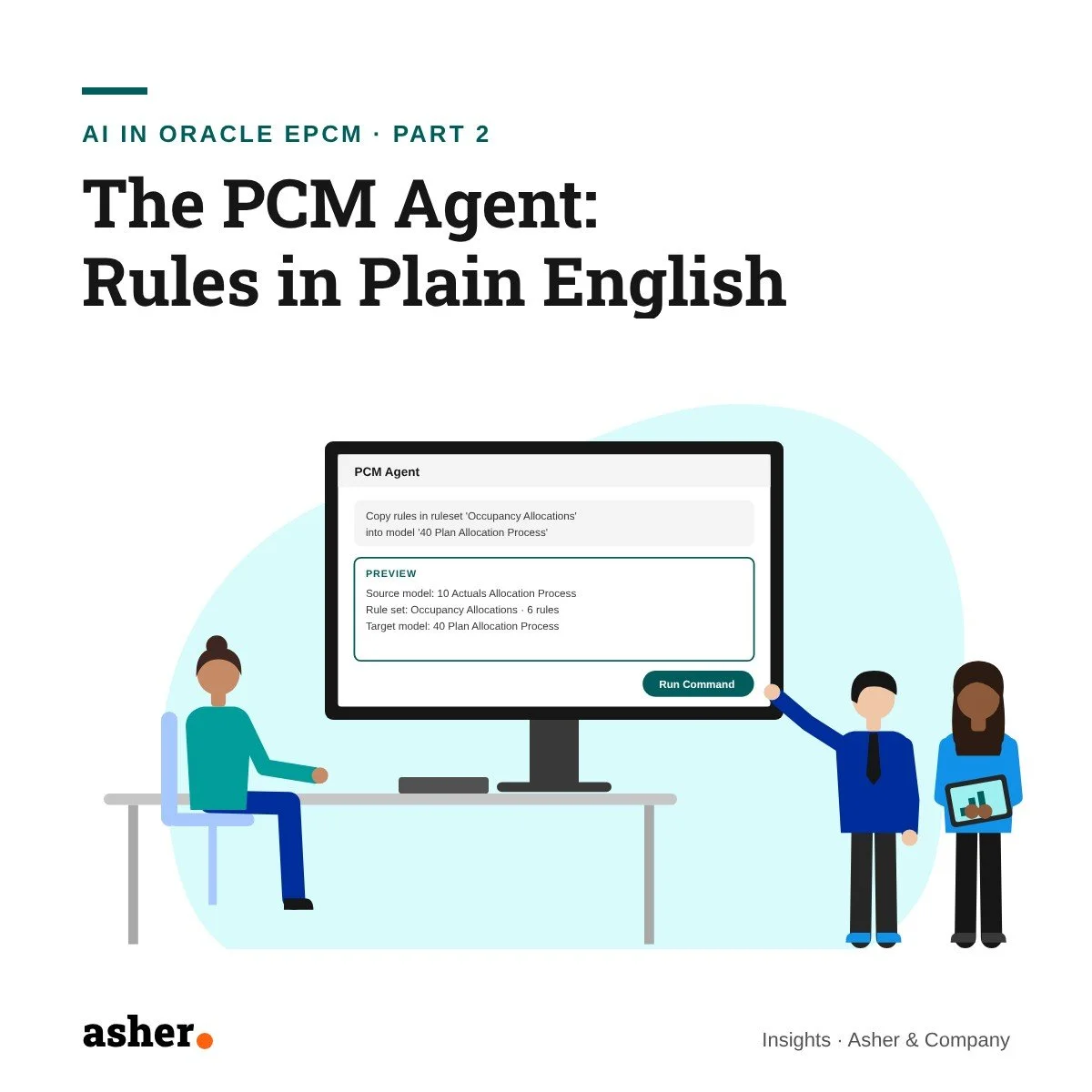
The PCM Agent: From Waterfall Sketch to Rules in Plain English
The PCM Agent turns structured English into EPCM modeling actions. Here is what it does well, where it stops, and how to structure a waterfall so your requests produce the rules you meant.
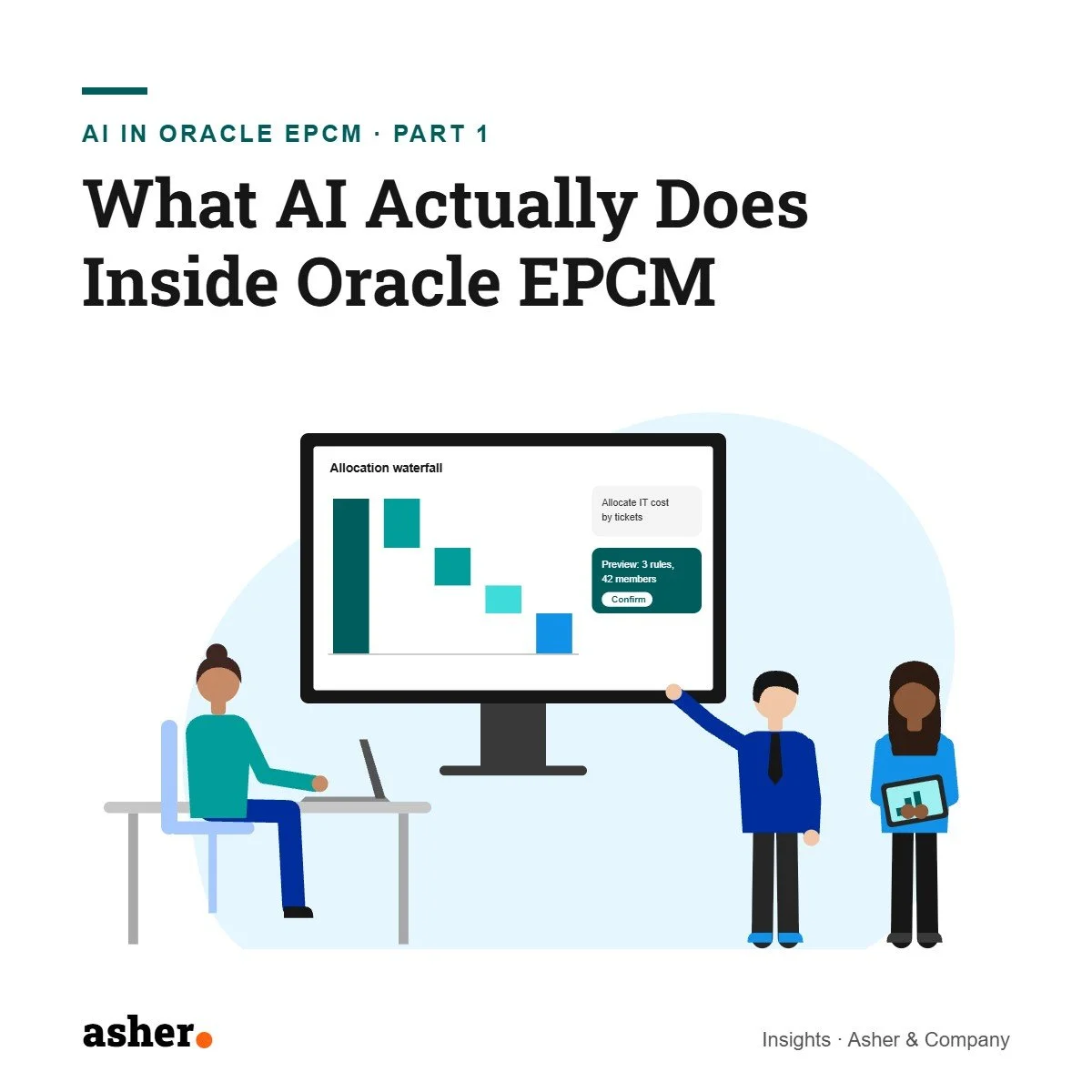
What AI Actually Does Inside Oracle EPCM in 2026
Oracle EPCM now ships a PCM Agent, IPM Insights and generative summaries. Here is what each one does, what is still missing, and why every AI feature is only as good as the model underneath.
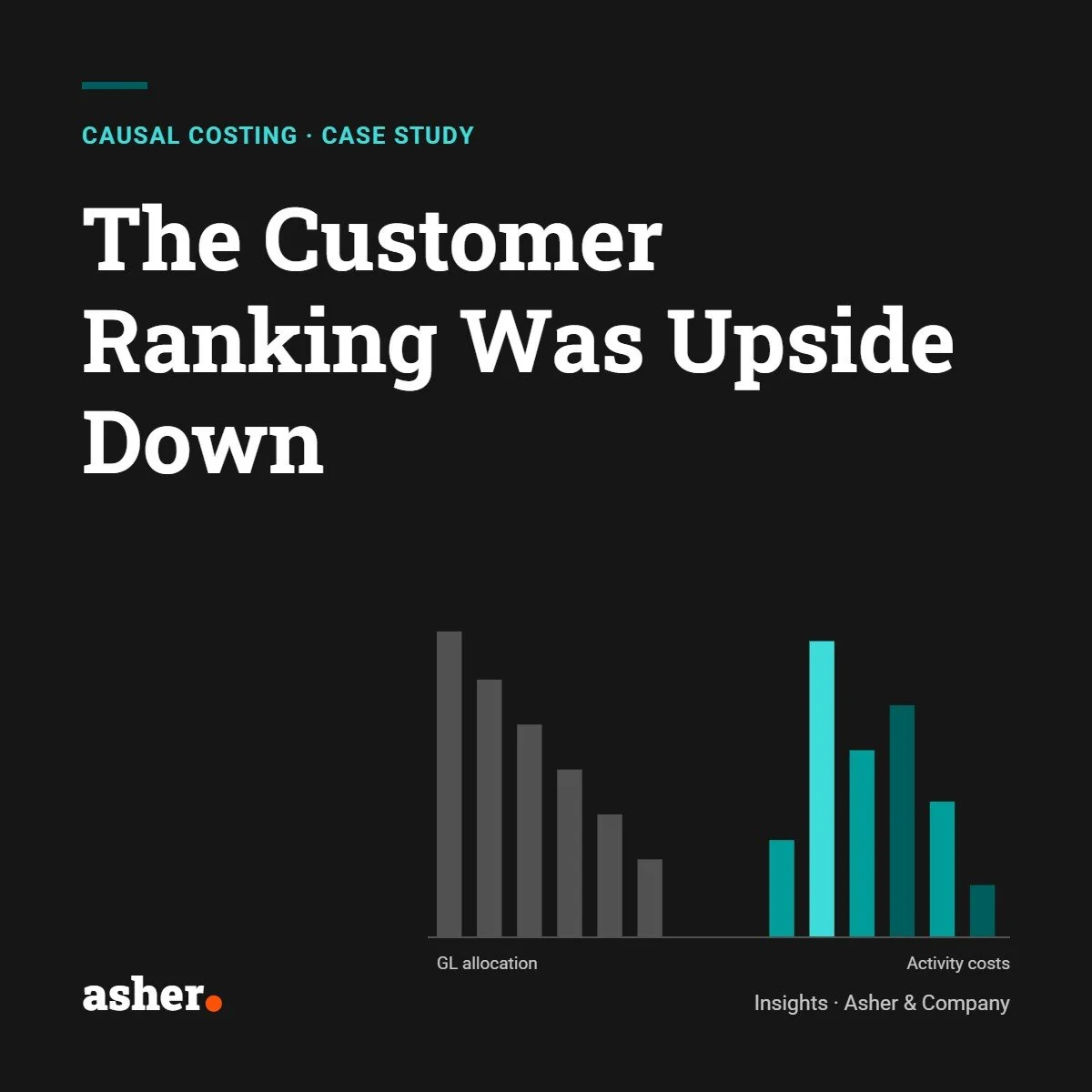
The Customer Ranking Was Upside Down
A global air express carrier believed its banking customers lost money. The spreadsheet was wrong. The fix came from choosing the right cost drivers, and it changed how the company priced every account.
The Uncollectible Promise
A CFO showed me his AI dashboard — models, anomaly detection, the works. Then I asked how many committee decisions it had actually changed. None. That's the trap: measuring AI value in finance by hours saved instead of decision quality. Here's what to track instead — and why regulators will soon demand it.
The Model Doesn’t Lie
Twelve executives approved the same profitability model. They had each signed a different one. EPM implementations don't create the misalignment between FP&A and BP&A, they expose it during the build, at the worst possible cost. Why the dimensional model is the forcing function that surfaces the disagreement your deck hid for months, and how to settle the definitions before the cube does it for you.
From Spreadsheets to Strategic Finance: How BANTRAB Built Advanced Profitability and Cost Management on Oracle, Accelerated by AI
How Banco de los Trabajadores (BANTRAB) built advanced profitability and cost management on Oracle EPCM with Asher & Company — cutting model build cycles by 37%, decision cycles by 75%, and manual data prep by 64%, with Sáasil (powered by Anthropic) closing the gap between financial experts and the architecture.

The Model Works — But Can You Trust It?
A profitability model can pass every test and still mislead. Validation proves it sums — only governance proves it can be trusted. Here's how to close the gap.
EPCM Periodic Table
67 essential Oracle EPCM terms across 8 families — every definition you need plus the practical context we apply on real implementations. From cubes and allocation rules to genealogy, traceability, and methodology under D2V™. Click any element to see how it shows up in production.
When Labor Costs Become Strategy: Workforce Planning in the Age of AI
In 2025, AI was cited as a factor in 55,000 layoffs. In 2026, hyperscalers will spend $700 billion on AI capex. And 95% of enterprise AI pilots delivered no measurable P&L impact. These three numbers tell three stories — and bundling them as cause and effect is the most expensive narrative error of the year.

The Migration Clock Is Ticking: What 20 Years with Oracle EPCM Actually Taught Me
Most Oracle Hyperion EPCM teams know migration is coming. Few understand how much it already costs to wait. Here's what 20 years of migrations across 15+ countries actually taught me — and the four paths forward most consultants won't show you.
The Price of Not Knowing What a Chequing Account Costs
In the early 2000s, I was part of the ALG Software team that deployed Metify ABM at Scotiabank's Canadian Banking division. For the first time in the bank's history, management saw the fully loaded, activity-traced cost of each retail product. The silence in that room was unforgettable. A standard personal chequing account cost CAD $487 per year to operate. The bank was charging CAD $180. Pedro San Martín of Asher & Company tells the story of what Metify revealed — and why the 93x cost gap between a branch transaction and a digital one is the most important number in retail banking that most banks have never calculated.