

On November 10, QuantumBlack, AI by McKinsey, published Reinventing business planning with agentic AI. It is one of the clearest pieces I have read this year on where planning is going. The authors focus on demand planning and S&OP, and their argument travels well to any planning cycle a finance team runs.
Three ideas stood out for anyone who runs Oracle EPM.
First, a division of labor. Machine learning produces the forecast; language models explain it, question it and prepare the decisions around it. Neither does the other's job.
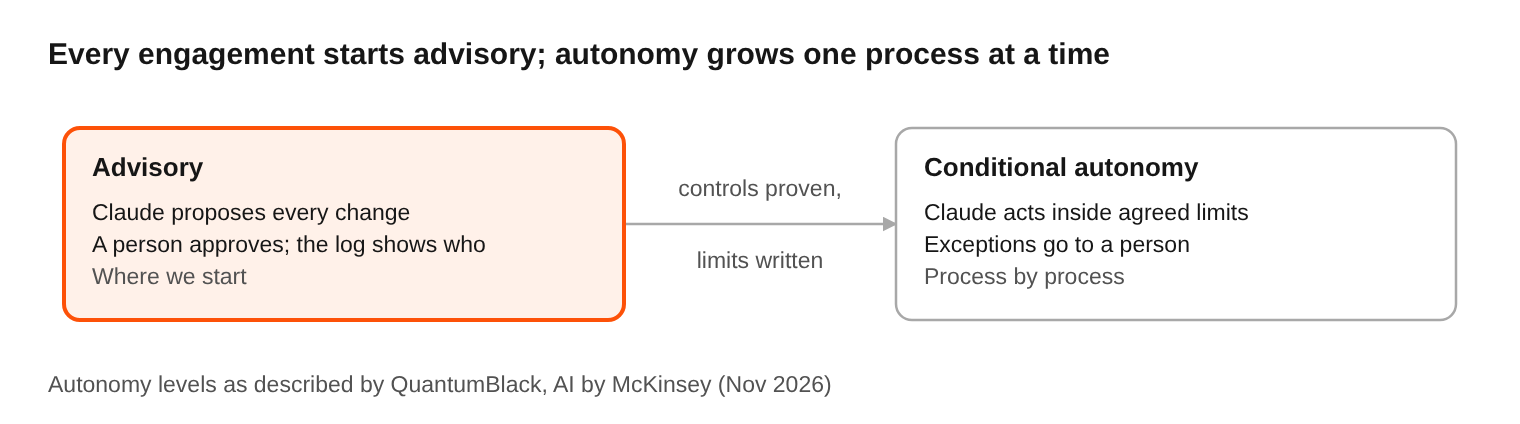
Second, autonomy is a dial. Most deployments today are advisory: the agent proposes, a person approves. The next setting lets agents act inside agreed limits and escalate the exceptions.
Third, adding agents to today's process is not enough. The process itself has to be redesigned, with named owners and decision rights, or the forecast gains never reach the balance sheet. The authors tie this to McKinsey's Rewired framework.
The article closes with seven diagnostic questions for leaders. They are the right questions. What follows is how we answer each one in an Oracle EPM environment, with Claude, by Anthropic, working as the layer between the model and the team.
Where each piece lives in Oracle EPM
Oracle EPM already ships the machine learning half of the picture. Predictive Planning, Auto Predict and Advanced Predictions produce statistical forecasts from history. IPM Insights watches the data and flags anomalies, bias and correlations. The EPM Assistant works the plan in natural language.
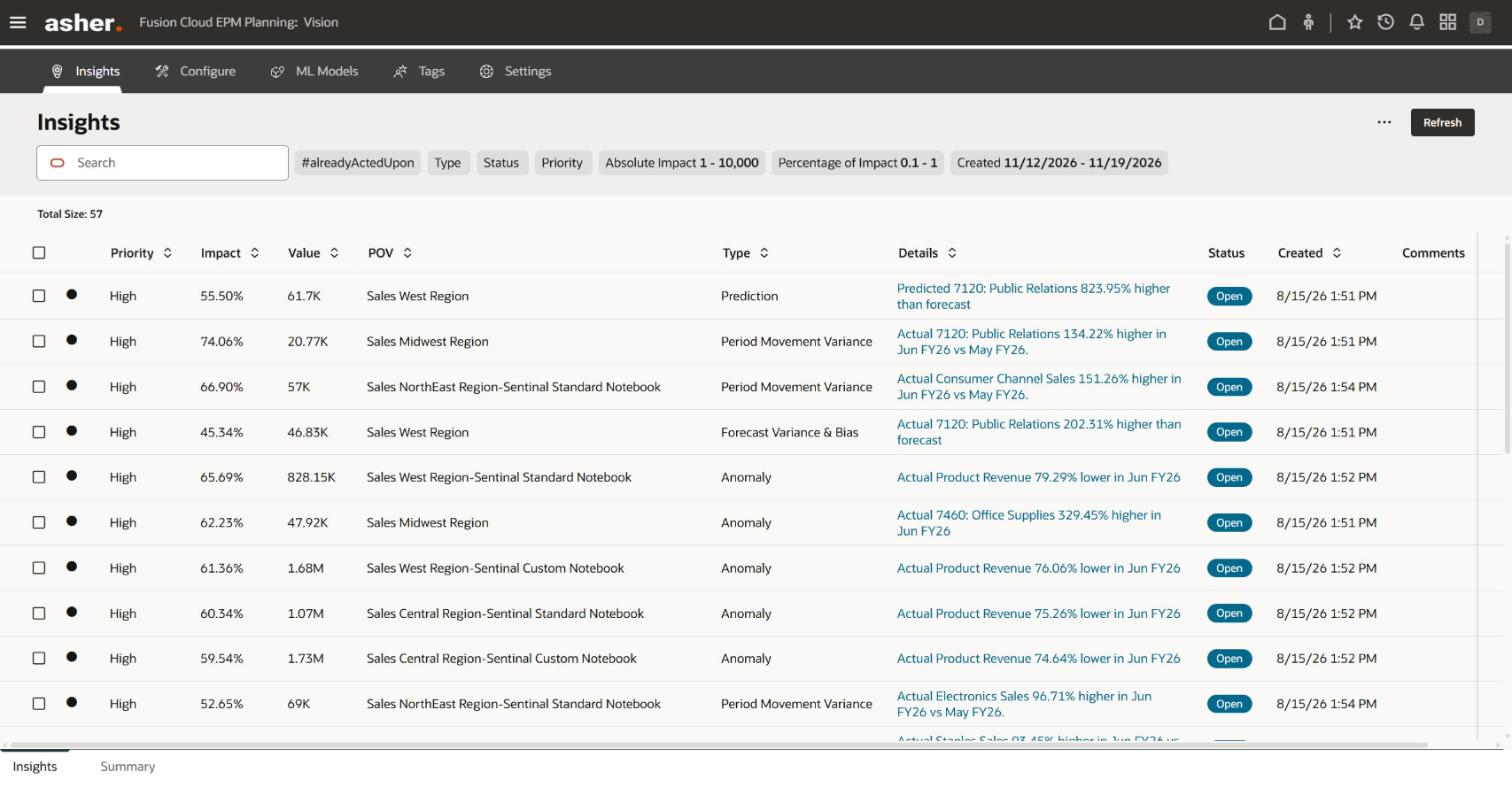
IPM Insights in Oracle EPM Planning: 57 open insights ranked by impact, from predictions to anomalies. Oracle Vision demo data.
What most teams lack is the work around those outputs: gathering the inputs, tying them out, explaining why a forecast moved, testing the assumptions and writing the narrative for the committee. That is where Claude comes in. It reaches the model through the Oracle EPM REST API, and every change it proposes carries an audit trail and a person's approval.
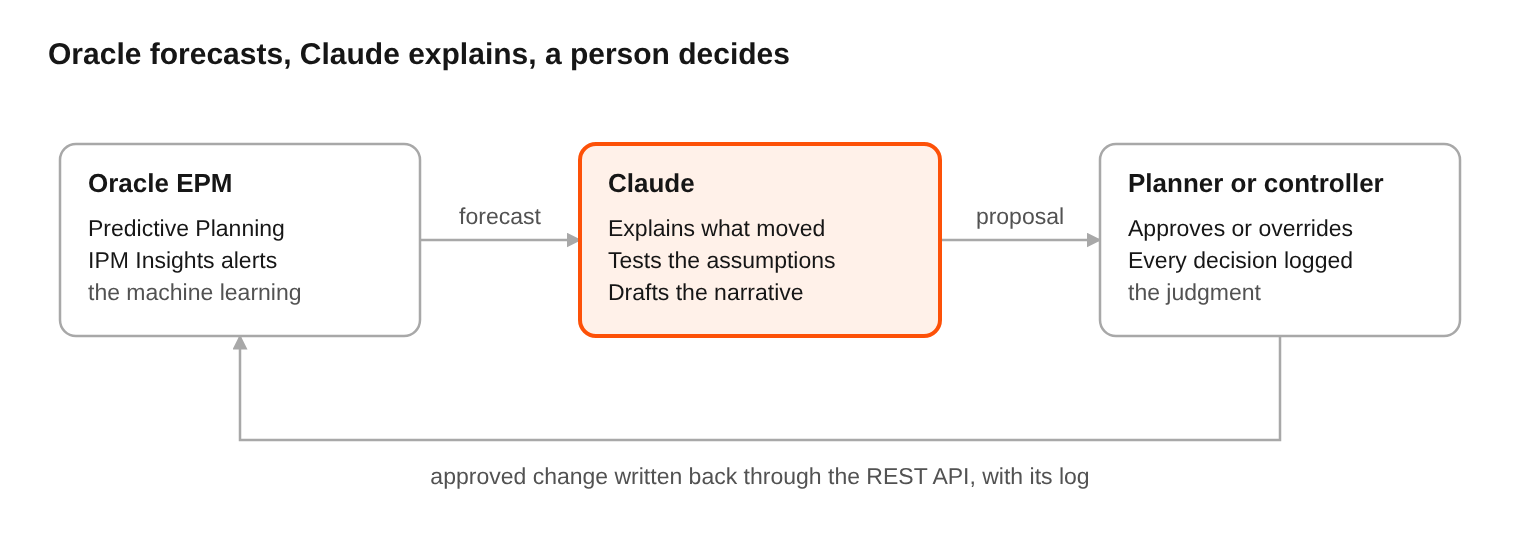
Each part keeps its own job: the forecast stays with Oracle's models, and the decision stays with a person.
The seven questions, answered in Oracle EPM
1. How much value is at stake? Start from the decision, not the tool. A Decision-to-Value™ business case ties each forecast improvement to the P&L or balance-sheet line it moves, and a value log tracks it after go-live.
2. Where are the forecast's blind spots? Predictive Planning and IPM Insights surface them. Claude reads the alerts, separates data errors from real business changes, and explains which driver moved the number.
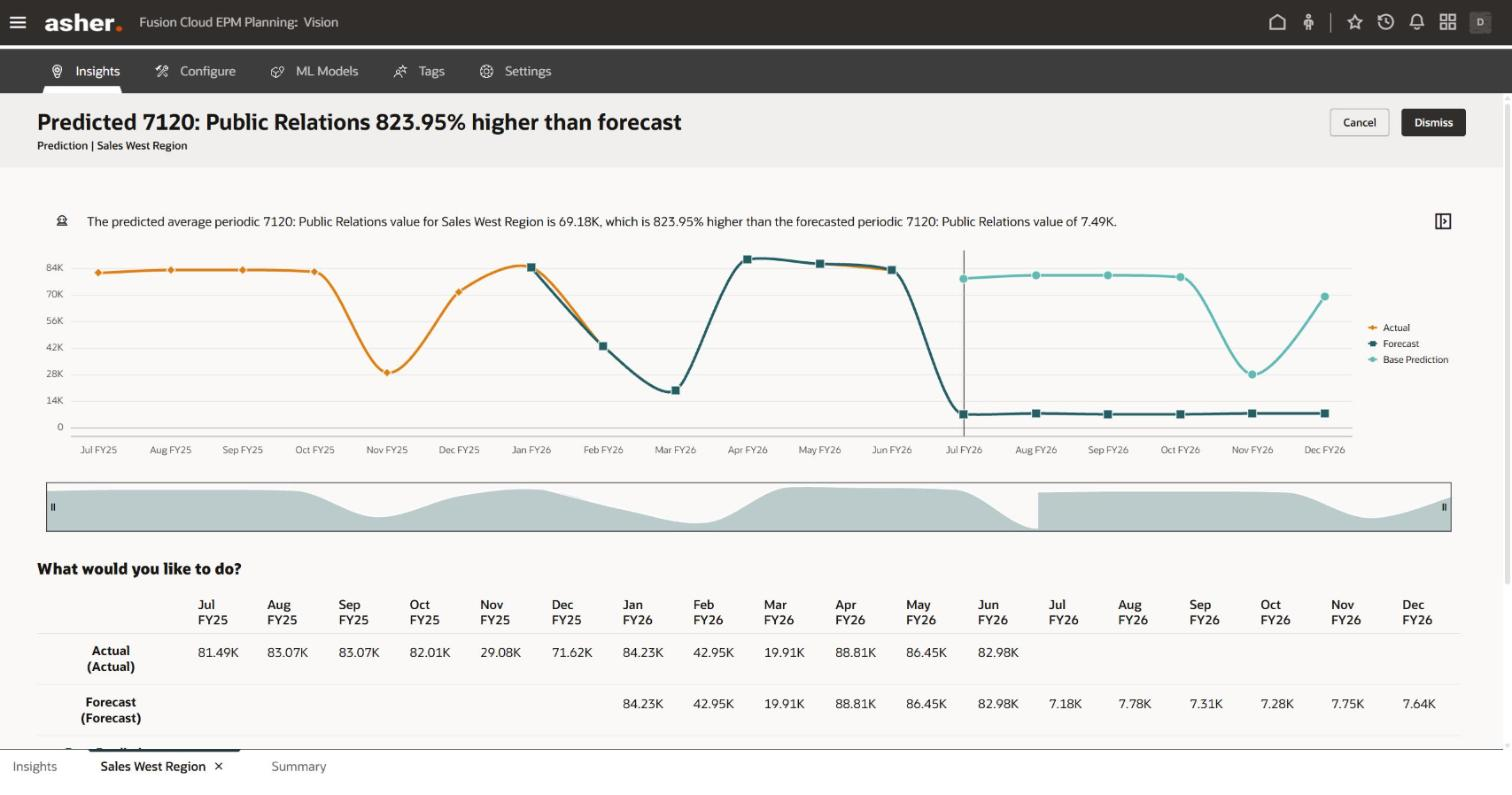
One insight opened: the base prediction runs near 80K a month while the submitted forecast drops to about 7K. Oracle flags the gap; Claude helps the planner find out whether the forecast or the prediction is wrong. Oracle Vision demo data.
3. At what level of detail should decisions be made? This is a model design question. The dimensions and members in Planning set the grain; a structure map agreed with the business keeps it from growing past what anyone decides on.
4. What planning horizon fits each decision? Scenarios and versions in Planning carry each horizon. Claude helps the team pick the two or three drivers that matter and challenges values that lack support.
5. Where does planner time go? In most teams we meet, it goes to loading, tying out and formatting. Claude takes that work: it validates every load against the source and drafts the variance narrative, so planners spend their hours on the exceptions.
6. Who owns each parameter? A decision charter names the owner, the forum and the cadence for every parameter that feeds the plan. Without it, nobody updates the targets, and the better forecast changes nothing.
7. Do manual overrides improve the forecast? McKinsey suggests many organizations never check. In Oracle EPM, every adjustment to a Predictive Planning forecast can be logged with its reason and its approver, and Claude can compare each override against actuals. Our Model Governance Review makes that check a routine.
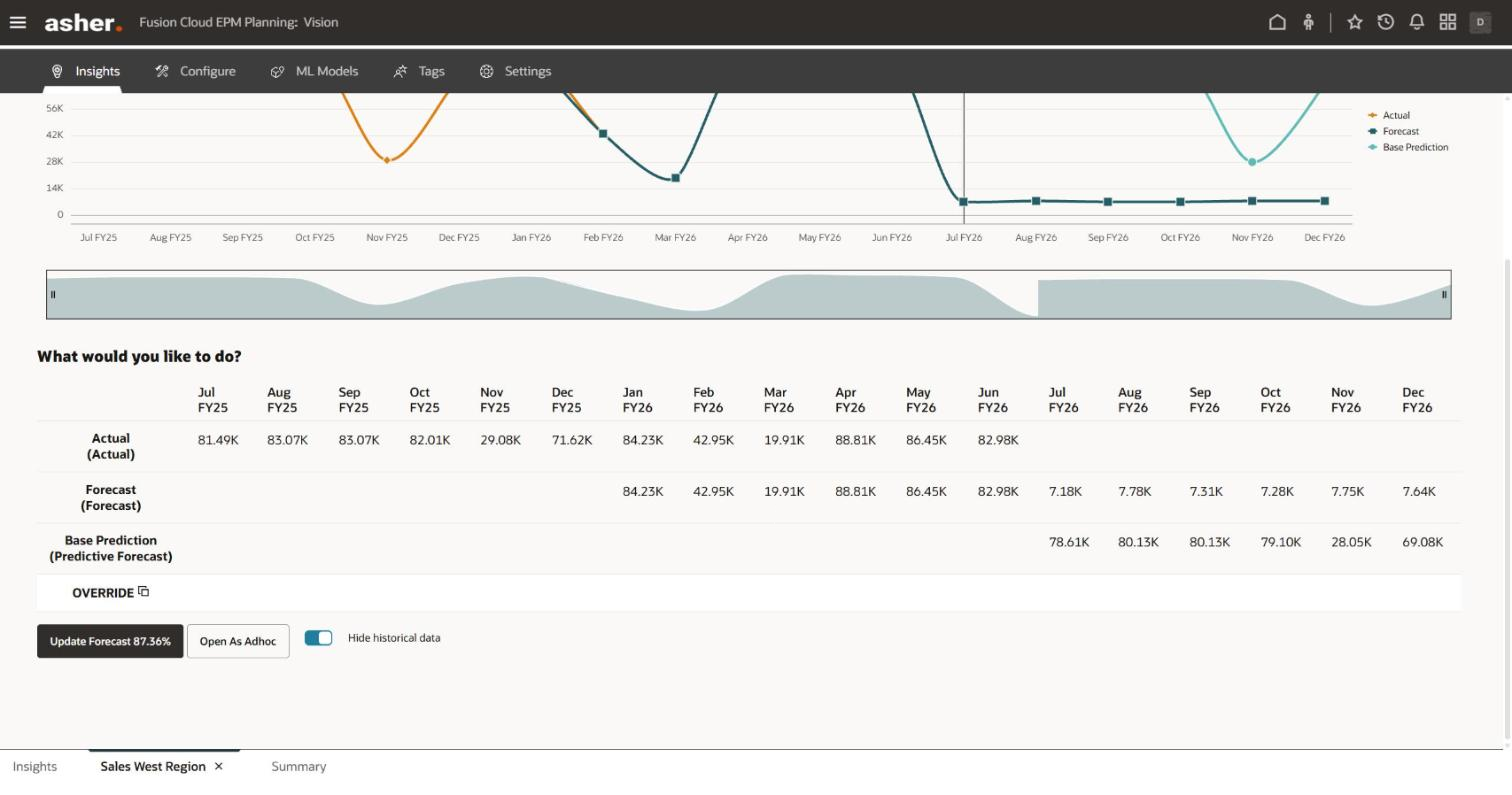
The override row: where a planner changes the forecast before it is updated. That change is what McKinsey suggests tracking. Oracle Vision demo data.
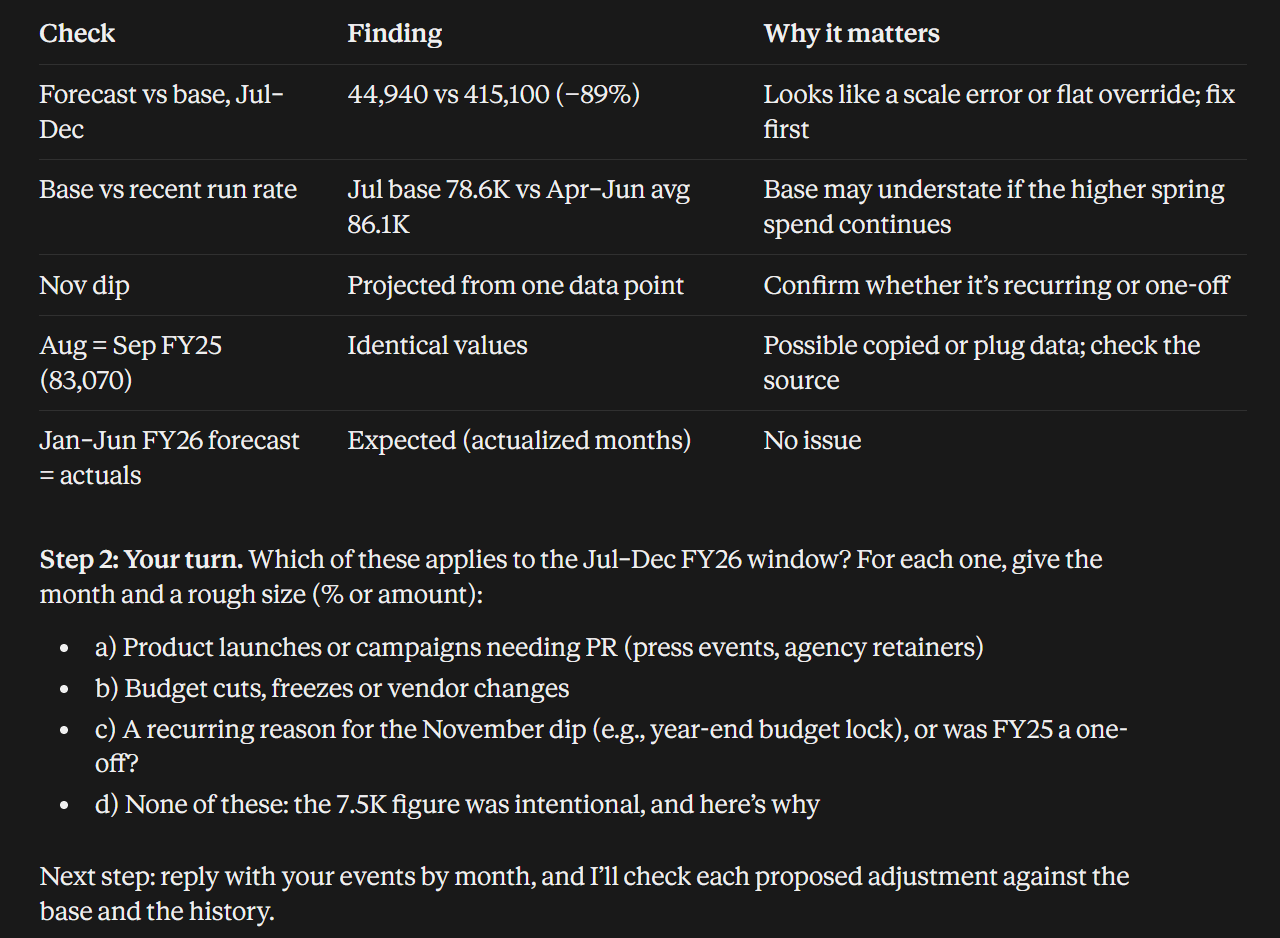
Claude working prompt 8 on the same demo forecast: it flags the 89% gap as a likely scale error or flat override, questions the November dip, then hands the planner the next move before any adjustment is made.
Advisory first, then limits
We follow the same autonomy dial. Every engagement starts advisory: Claude proposes, a person approves, and the log shows who approved what. Conditional autonomy comes later, process by process, once the team trusts the controls and the limits are written down.
Where to start
If your team runs Oracle EPCM or Planning, take the Oracle EPM + Claude Radar. It takes three minutes and shows which of six fronts is ready. The twelve prompts on the same page teach your planners to work with Claude as a tutor, using the questions above.
McKinsey framed the questions. This is how we answer them in Oracle EPM.
Source: Holger Hürtgen, Julian Fischer, André Fuetterer, Denis Lebedev and Nils Wittmann, "Reinventing business planning with agentic AI," QuantumBlack, AI by McKinsey, November 10, 2026. Claude and Anthropic are trademarks of Anthropic PBC; Oracle is a registered trademark of Oracle Corporation.
